
Today I want to talk to you about cannabis’s beautiful and vast array of terpenes. As the flower that it is, it comes in all shapes, sizes and colours, and the different smells are truly what make this plant medicine so diverse and unique in how it can treat a multitude of symptoms and have many effects on the body.
Terpenes create the smell, taste and pigments of a plant. Becoming aware and getting to know which terpenes work for you will change your relationship with cannabis for the better, save you money and even change the way you interact with and choose other non-cannabis products and plants. The nose really does know — let’s find out why.
What Are Terpenes and Their Medicinal Properties?
Open up the container with your cannabis in, or go and smell some coffee. When you take a whiff of these natural smells, you are inhaling plant terpenes! Terpenes are the chemical compounds that create smells. Have you ever wondered why some cannabis chemovars have names that describe what they smell of, like Pineapple Express and Lemon Haze?
That is because the exact same terpenes that exist inside an actual lemon and pineapple are also naturally present in cannabis flowers, and in many other plants, herbs, fruits and vegetables too. They also affect how you feel however you consume them, and their medicinal value is immensely underrated and rarely acknowledged — yet they have been used in medicine for centuries.
If you are an essential oil lover, you will know the power of scent and aromatherapy. These extracted terpenes can modulate the way immune cells behave, and they have antibacterial, antimicrobial, anti-inflammatory, sedative and even anti-tumour benefits, amongst many others. So, in addition to your bud’s cannabinoids, it’s packing these extra holistic health benefits too.
Common Terpenes Found in Cannabis
Here is a list of some common terpenes found in the cannabis plant:
- Limonene – energising and uplifting
- Trans-nerolidol – helps with depression and is stimulating
- Humulene – relaxing and helps with sleep
- Myrcene – sedative and muscle relaxant
- Pinene – helps with memory and is anti-inflammatory
- Linalool – helps with sleep and is relaxing
- Alpha-bisabolol – anti-inflammatory and pain relief
- Beta-caryophyllene – pain relief and antioxidant
There are terpenes you may be familiar with from the ingredients lists on household products, such as cleaning products. Limonene, pinene and linalool are commonly found in citrus, pine and lavender-scented kitchen and bathroom products, including perfumes, skincare, candles and floor cleaners. If you can smell it, then it’s a terpene.
How Terpenes Influence Our Experience of Cannabis
Citrus, lemon, pine and eucalyptus are associated with uplifting, invigorating, pick-me-up and energising smells for most people. Limonene, the dominant terpene in lemon juice, is also commonly the dominant terpene in what would be identified as a sativa-dominant flower. Consumers look to these for an energetic and stimulating experience, instead of the heavy, relaxed body feeling that may target sleep, like linalool, which can be more sedating.
Cannabis plants, whether THC, CBD or CBG dominant, all contain multiple combinations of terpenes, called a profile. When your buds have a terpene profile to view before you purchase, this is how you really get to know their true power and whether they are right for you.
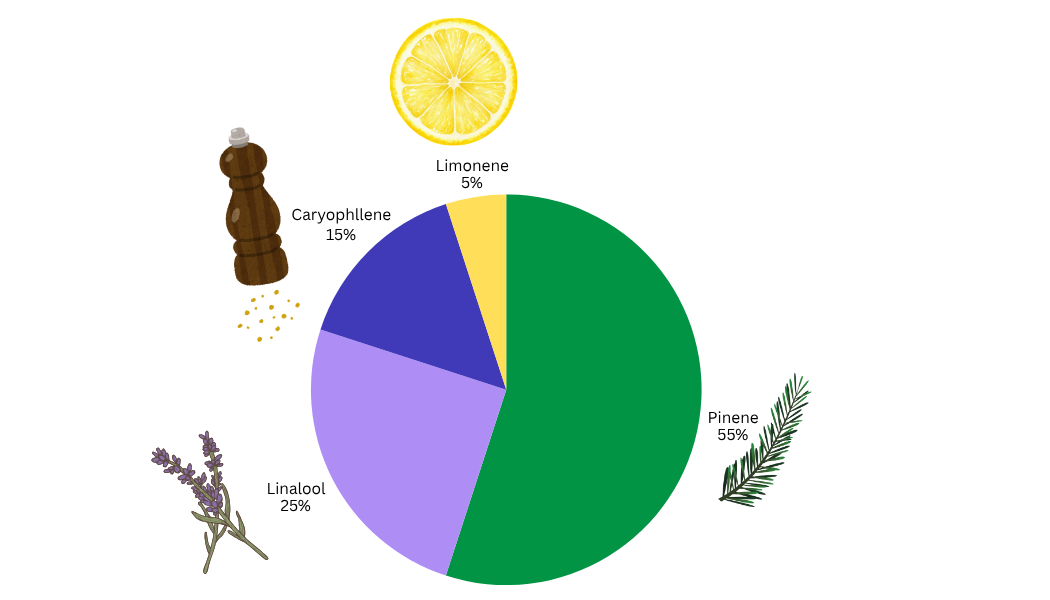
With my clients, some of the first questions I ask are: “What are your favourite smells? What smells do you like that relax you?” This gives a baseline guide to which dominant terpenes might work well in cannabis for that person.
Why More THC Doesn’t Always Mean Better Medicine
I am a firm believer and word-spreader that a higher THC % is not always where the magic happens. In fact, for a lot of people a high THC content doesn’t help them medicinally, and it can completely deter someone from trusting that this plant medicine can bring them a better quality of life. A perfectly paired terpene profile, alongside balanced cannabinoids complementing each other, is the path to individually tailored medical cannabis. A knowledgeable practitioner keeps note of a patient’s preferred terpenes and how those cannabis chemovars (strains) are affecting them, as well as their cannabinoid intake.
This is valuable knowledge to gain for yourself, so I invite you to start really smelling your buds. What smells good to you might not smell great to someone else. Your reaction to a smell is your body giving you a message — smell is one of your five senses for a very important reason, and that is investigating! What is for you, what is not for you, and how it can benefit you. Most days, when I am unsure what would be best for my symptoms, I let my nose guide me through my prescription to the flower that would be best for that moment.
Individual Sensitivities and Experience
From my personal experience, I have discovered that limonene is far too stimulating for me and can end up causing my anxiety to flare up, so I make sure that what I am prescribed has no limonene present at all, or that it is one of the less dominant terpenes on the pie chart.
After further loving research into what works for me and what doesn’t, I discovered that some terpenes can cause allergic reactions and aggravate a histamine response. While studies are testing CBD as a mast cell stabiliser, some of the terpenes it carries can be disruptive.
Terpenes to avoid if you suffer from MCAS or are prone to allergic reactions are limonene, alpha- and beta-pinene, ocimene and terpinolene. You may be able to tolerate some of these as minor terpenes in a profile, or not at all.
Making Informed Choices About Your Cannabis Medicine
You can start opening up the conversation about terpenes with your prescribing doctor or budtender to refine your search. They may already have a good idea of what works for you, or they may need more information and details about your preferences to help you get the most holistic potential from your medicine.
Having a better understanding of the full spectrum of a cannabis plant’s overall profile, and how it can make us feel, leads the way to decreasing the chances of undesired side effects, getting the most from our medicine and learning much more about ourselves alongside plants.
Begin to take note of the terpenes you come across and consume — keeping a medicine and symptoms diary can help you keep track of what is helpful and what to avoid. “Get curious” is my message to you today, so start your journey into curated cannabis and better health.
At EthVida, we are advocating for better medical cannabis practices and educational resources for practitioners and patients. Stay tuned to learn more about terpenes and how medical cannabis could improve your quality of life.